

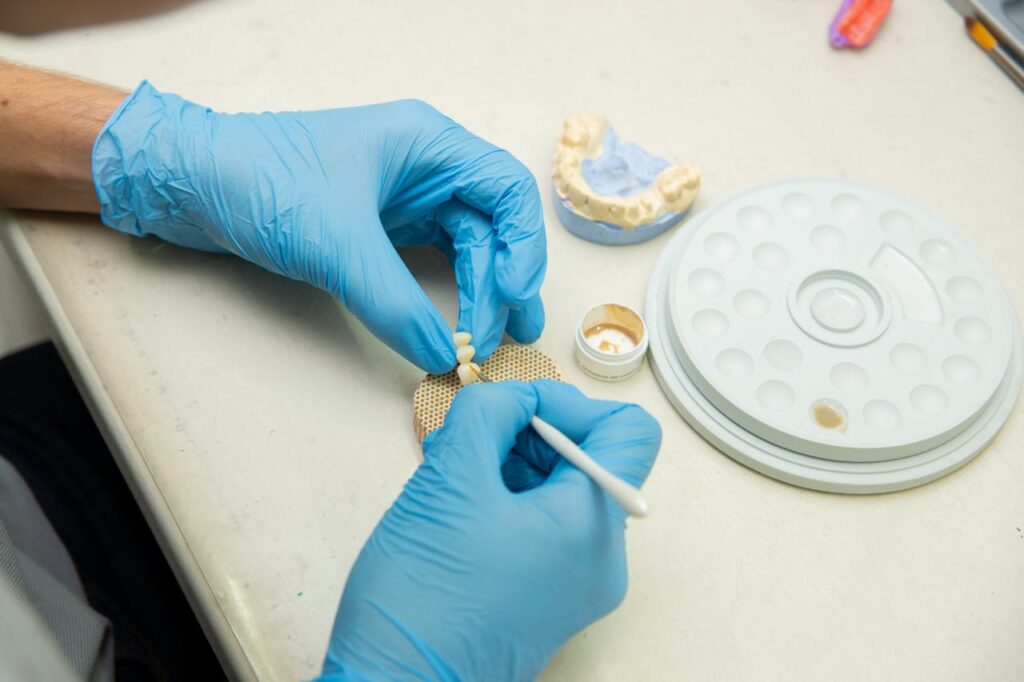
All-on-4 treatment has changed how dentists restore a full arch of missing teeth, replacing removable dentures with a fixed bridge on four strategically placed implants. In Australian clinics, a growing number of patients now choose zirconia for the final bridge instead of acrylic or porcelain-fused-to-metal options. This shift is not just about style or fashion. It reflects clear preferences around appearance, strength, comfort and long-term value supported by clinical evidence.
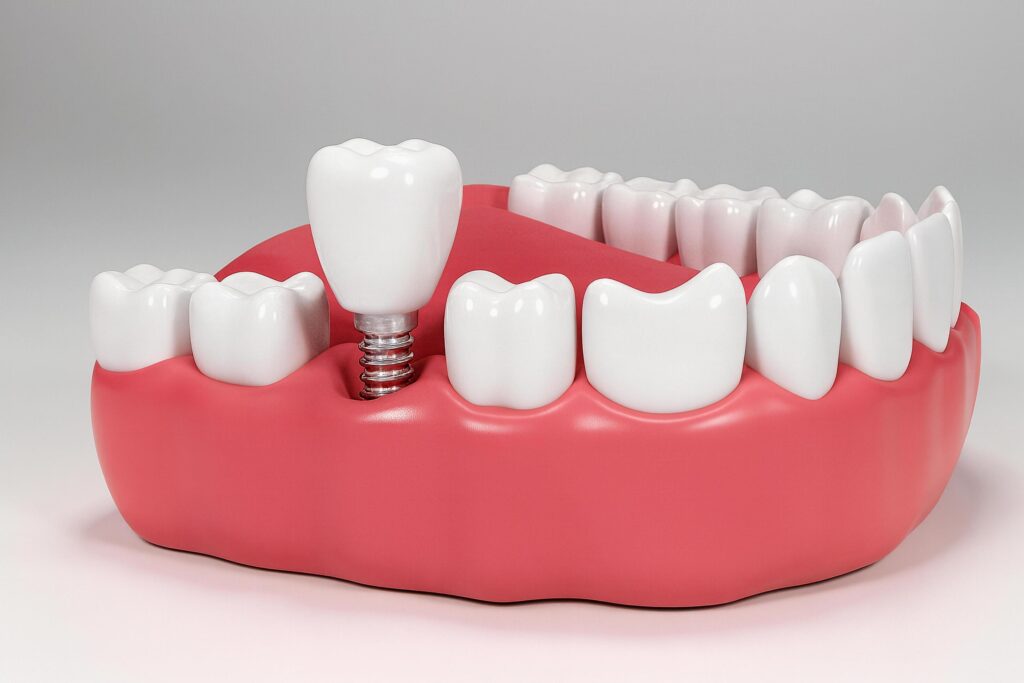
What is zirconia and why does it matter?
- Zirconia is a high-strength ceramic, used for years in crowns and bridges and now widely adopted for implant-supported full-arch teeth.
- Studies show zirconia restorations have excellent survival rates, particularly when made as monolithic (one-piece) restorations, with reported survival above 95% over several years.
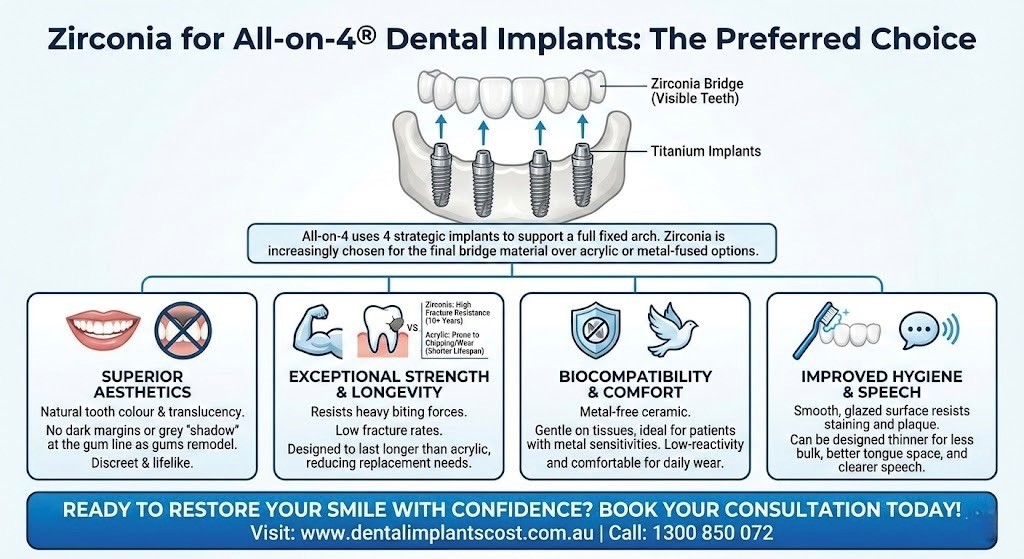
- For All-on-4, zirconia usually forms the visible teeth and bridge framework, while the implants themselves remain titanium in most cases.
Patients are not replacing metal implants. They are choosing a different material for the bridge that everyone sees and uses every day.
Here’s why Zirconia is demanded for All on 4 dental implants.
1. Aesthetics closer to natural teeth
One of the main reasons patients lean towards zirconia is appearance. Zirconia is naturally white and can be layered or shaded to match lifelike tooth colour, without the grey “shadow” that metal can create under thin gums.
As gums remodel over time, older metal-based bridges may show dark margins. Zirconia does not have this problem, which appeals to patients who want their All-on-4 result to stay discreet and natural-looking over the long term.
Experts often highlight Zirconia’s translucency, stain resistance and slimmer, more tooth-like profiles.
Many clinics in Australia now recommend zirconia bridges for all on four dental implants.
2. Strength and longevity
Full-arch bridges experience heavy chewing forces, especially in patients who grind their teeth or enjoy tougher foods.
Zirconia is one of the strongest dental ceramics available and has been shown to withstand high bite forces with low fracture rates when properly designed and manufactured.
Comparative work on full-arch prostheses indicates that zirconia and high-quality ceramics generally last longer than acrylic teeth, which may chip or wear after only a few years.
For All-on-4, the implants themselves can last decades with good care, but the bridge often needs replacement at intervals.
Australian data and clinic reports suggest that well-made zirconia bridges, when maintained properly, can remain serviceable for 10 years or more.
3. Good Biocompatibility
- Some people are wary of visible metal in their mouth or have a history of sensitivity to certain alloys.
- Zirconia is metal-free and highly biocompatible, which makes it a comfortable choice for many patients and a useful alternative where allergies are suspected.
- Patients who value a low-reactivity, metal-free aesthetic solution often find zirconia a reassuring option.
Also Read: 10 Questions to Ask Your Dentist Before Getting Full Dental Implants
4. Daily comfort, speech and hygiene
Because zirconia is so strong, technicians can often design bridges that are thinner yet still robust. This can give the tongue more space, improve speech clarity and reduce the “bulky denture” feeling some people report with acrylic bridges.
The glazed surface of zirconia is also smooth and relatively resistant to staining, which helps with cleaning. That does not remove the need for excellent oral hygiene and regular professional maintenance, but it can make day-to-day care more manageable for many patients.
Choose a reputable clinic in Australia
Not every zirconia bridge is identical. Outcomes depend on careful planning, digital design, implant positioning and the skill of the dental laboratory. When researching providers in Sydney, look for these aspects:
- Experience with zirconia in full-arch cases
- Whether the lab work is done locally or offshore
- The type of zirconia used and any warranty on the bridge
- Maintenance protocols and review schedule
Ready to finally restore your smile with confidence? Visit https://dentalimplantscost.com.au/ and book your consultation today to see if you’re a candidate for long-lasting All-on-4 dental implants.
Frequently Asked Questions:
1. How long do All-on-4 dental implants last?
The titanium implants can last for decades, and many studies report survival rates above 95% over 10 years or more when patients maintain good oral hygiene and attend regular reviews. The bridge on top has a shorter lifespan and will eventually need replacing.
2 .How much do All-on-4 dental implants cost in Australia?
Fees vary between clinics and cities. Factors include the need for extractions or bone grafting, the number of visits, sedation type, the dentist’s experience, and whether the final bridge is acrylic, hybrid or zirconia. Laboratory quality, warranty and follow-up care also influence cost.
3. Are zirconia All-on-4 bridges stronger than acrylic ones?
Zirconia has much higher fracture resistance than acrylic and is less prone to wear or staining. Acrylic bridges can still work well, especially as provisional restorations, but they are usually expected to need replacement sooner under normal chewing forces.
4. Do zirconia bridges look more natural?
Many patients and clinicians feel they do. Zirconia’s tooth-coloured core avoids dark lines at the gum and can be layered or characterised for a lifelike appearance, especially in the front teeth where light transmission and colour matching matter most.
5. How should I care for a zirconia All-on-4 bridge?
Daily brushing with a soft brush, cleaning under the bridge with interdental aids, and using any specific tools recommended by your dentist are vital. Regular professional maintenance visits allow your dentist to check the implants, tighten screws if needed and polish the zirconia surface so it stays smooth and easier to clean.