

If you have missing or failing teeth and a calendar that’s already packed, it’s easy to put treatment off. Yet the longer you wait, the harder everyday things can become: eating comfortably, speaking clearly, even smiling without second-guessing yourself.
One option many clinics discuss is All-on-4 dental implants. Here’s what you should know.
Teeth-in-a-Day (All-on-4) — How Same-Day Teeth Works
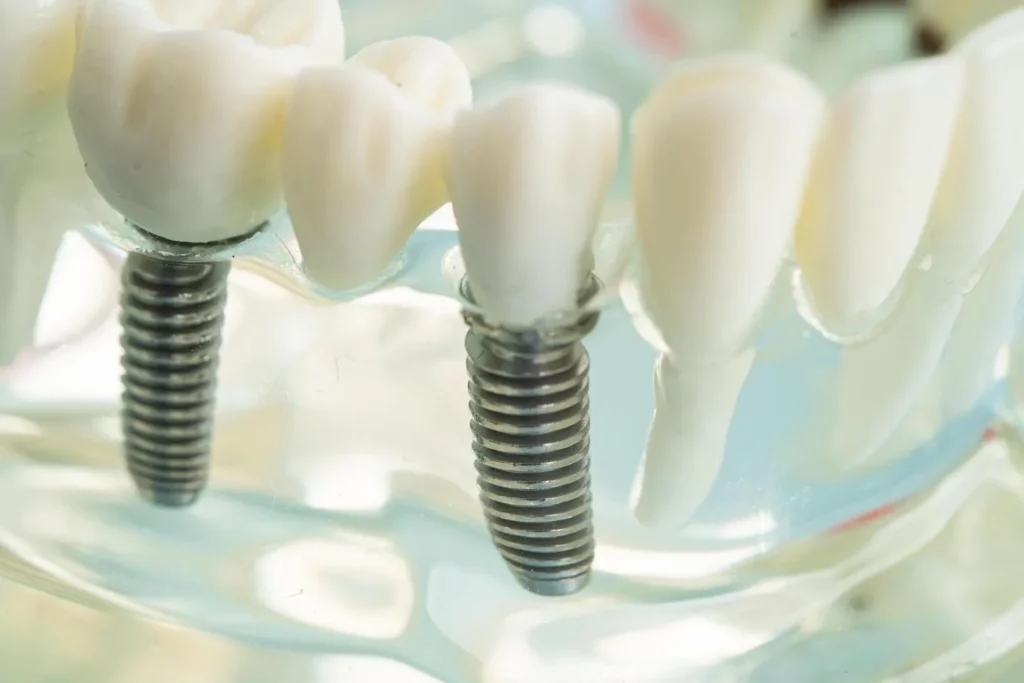
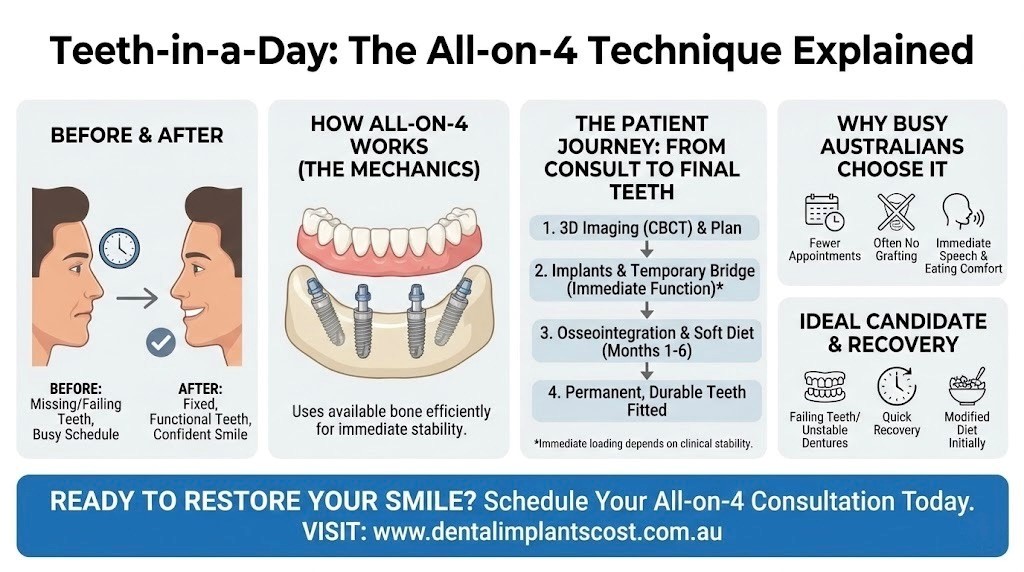
The All-on-4 concept uses four implants to support a full arch: two placed toward the front and two angled at the back to make better use of available bone and avoid key anatomical structures.
When conditions allow, a temporary fixed bridge may be attached soon after surgery, which is why people often call it Teeth in a Day implants. Not everyone qualifies for immediate loading. It depends on stability and clinical risk factors assessed by your dentist.
Why Busy Professionals in Australia Choose All-on-4
For people juggling work, family, and travel, appointment-heavy treatment plans can be a deal-breaker.
All-on-4 can compress the overall process by combining extractions (if needed), implant placement, and a provisional bridge into a tighter schedule than traditional staged approaches.
Who is a Good Candidate for All-on-4 in Australia?
All-on-4 suits people who have lost most teeth in an arch, have teeth that cannot be saved, or struggle with unstable dentures.
A proper assessment matters because not all mouths behave the same way. Experts note that implants aren’t suitable for everyone and that several types of clinicians may provide implant care, depending on the case.
Your dentist will also consider medical history, gum health, smoking, and whether you can commit to cleaning and reviews after treatment.
Step-by-Step: The Teeth-in-a-Day Procedure at an Implant Clinic in Sydney
- Most clinics start with a consultation, photographs, and a 3D scan (often CBCT) to map bone and plan implant position.
- On the day, the clinician places implants and fits connectors (abutments) designed for full-arch bridges.
- If immediate loading is suitable, you may leave with same-day full arch implants in the sense that a temporary fixed bridge is attached within the immediate loading window.
- The final bridge is typically fitted after healing and integration.
All-on-4 vs Traditional Implants vs Dentures — What’s Best in Australia?
Traditional full-arch implant approaches may use more implants and sometimes include grafting to build bone before placement. All-on-4 often aims to reduce grafting needs by tilting the back implants.
Removable dentures can be more affordable upfront, but they may move and can rub. If you’re weighing All-on-4 vs dentures, it helps to ask a simple question: do you want something removable, or do you want teeth that stay put?
All-on-4 recovery timeline — When You Can Return to Work After All-on-4
- Recovery varies, but most people should plan for swelling and a quieter few days after surgery.
- Clinics usually recommend a modified diet while tissues heal and the implants bond with bone.
- Many protocols move from a provisional bridge to a final bridge after several months. On average, it takes around six months to place permanent teeth.
- If your job involves heavy lifting or long speaking days, flag that early so your clinician can tailor advice.
Cost of Teeth-in-a-Day (All-on-4)— What Influences Pricing?
Pricing for full mouth dental implants (or even one full arch) depends on the clinical picture rather than a single “standard fee.”
The biggest drivers tend to be extractions, the need for infection control before surgery, sedation choices, scan and planning requirements, and the materials used for the final bridge.
How Long Do All-on-4 Implants Last?
All-on-4 Implants are proven to have high survival rates across many studies. Long-term outcomes depend on several factors including regular cleaning, managing gum inflammation, and protecting the bridge if you grind your teeth.
When people talk about “immediate dental implants”, they’re describing a loading protocol, not a promise that every patient will be suitable for same-day loading.
Schedule a Consultation
If you’re exploring All-on-4 dental implants in Australia, start with a consultation that includes a 3D scan and a clear written plan.
Book an All-on-4 consultation with the Dental Implant Professionals to get a personalised assessment, including imaging and a written treatment plan that suits your schedule.
Also Read: 10 Questions to Ask Your Dentist Before Getting Full Dental Implants
Frequently Asked Questions:
1) What is Teeth-in-a-Day and how does All-on-4 work?
Teeth-in-a-Day is a common label for treatment where a temporary fixed bridge is attached soon after implant surgery, when it’s appropriate to do so. All-on-4 uses four implants to support a full-arch bridge, usually with two implants angled at the back to use available bone efficiently.
2) Do you really get new teeth on the same day?
Some patients leave with a temporary fixed bridge within the immediate loading period, but it depends on clinical stability and risk factors. Immediate loading is generally defined as connecting implants to a prosthesis within one week, not a guaranteed “walk in and walk out” promise for every case.
3) How long does the All-on-4 procedure take?
Timing varies with the number of extractions and whether one or both arches are treated. Your clinician can give a realistic estimate after scans and planning. What matters more than the clock is that the implants achieve the stability needed for the chosen loading protocol and that the provisional bridge fits accurately.
4) What can I eat after All-on-4 surgery?
Most clinicians recommend a softer diet while gums heal and bone integration progresses. That often means avoiding hard, crunchy, or sticky foods early on, even if you have a temporary fixed bridge. Your dental team should give written instructions tailored to your surgery and medical history.
5) How long do All-on-4 implants last?
Studies report high implant survival rates, but results vary across patients and protocols. Daily cleaning, professional maintenance, and managing risk factors like smoking or untreated gum disease all affect how well implants and bridges perform over time.