


For many older Australians, missing teeth are not just a cosmetic worry. They can change what you eat, how clearly you speak, and whether you feel comfortable smiling in photos. It’s no surprise that Dental implants for seniors come up often in conversations about long-term tooth replacement. The real question is whether age itself is a barrier, or whether other factors matter more.
Age is not the deciding factor
Dentists don’t work with an “expiry date” for implant treatment. The stronger message from the research is that overall health, oral health, and jawbone conditions matter far more than the number on your birthday cake.
A systematic review focused on older adults reported high implant survival rates after loading, including strong results at the one-year mark. Another more recent analysis that included patients over 75 reported five-year survival rates that were still very high.
Advanced age alone is not considered a contraindication for implant therapy. Many people in their seventies and eighties can do well with implants when the planning is sound and health risks are managed.
What matters more than age
If you’re weighing up implants later in life, your dental team will usually focus on a few practical questions.
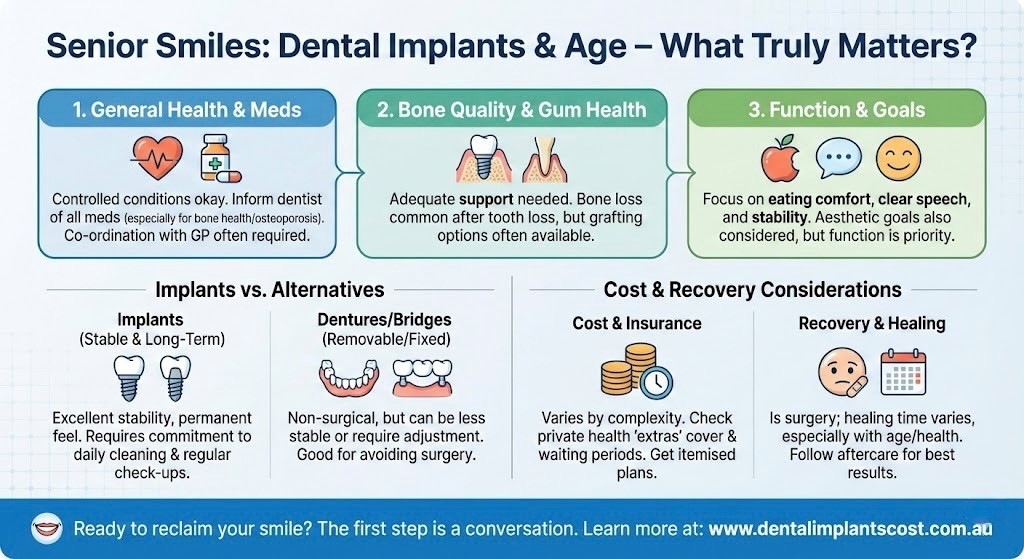
1) General health and medications
Controlled chronic conditions often aren’t deal-breakers, but they can affect healing and infection risk. The bigger issues tend to involve medications that influence bone turnover. Drugs used for osteoporosis or some cancer treatments can be linked to medication-related osteonecrosis of the jaw, which is rare but serious. This doesn’t automatically rule out implants, yet it does mean your dentist may want to coordinate with your GP or specialist before treatment begins.
2) Bone quality and gum health
Implants need adequate bone support. If there has been tooth loss for years, bone shrinkage is common. The good news is that options such as grafting or different implant approaches may still be possible, depending on anatomy and risk factors. (Your clinician will confirm this with imaging and an exam.)
3) Day-to-day function and goals
Some patients want to replace a single tooth. Others want a stable solution for a denture that slips during meals. For many, the decision comes down to function, comfort, and maintenance rather than “perfect” aesthetics.
Choosing between implants and other options
There is no single “right” option for every older person. Bridges and dentures can work well in the right circumstances, and they may suit people who prefer to avoid surgery. On the other hand, implants can offer excellent stability and can help reduce the day-to-day frustrations that come with loose appliances.
When people ask about Implants vs dentures for seniors, it often helps to frame the choice around eating comfort, speech, cleaning routine, and the condition of the remaining teeth (if any).
It’s also worth being open about the commitment. Implants are not a set-and-forget fix. They still need careful cleaning and regular check-ups, and gum inflammation around implants can occur if plaque control slips. A good clinician will talk plainly about aftercare and what long-term maintenance looks like.
Dental implant cost for seniors in Australia
Cost is a real concern, especially for retirees balancing health expenses. Pricing varies widely because it depends on the number of teeth, whether grafting is needed, the type of restoration, and the complexity of surgery. Some clinics charge per implant and crown; full-arch options are usually priced as a package.
It also helps to know where public funding fits. In Australia, Medicare generally doesn’t cover most dental services, which is why many people pay out of pocket or use private health insurance if their policy includes major dental.
If you are considering using extras cover, waiting periods are common for major dental items, often around 12 months, so timing matters.
A practical approach is to request a written treatment plan with itemised cost of dental implantsand staged options. Many clinics can also explain finance arrangements and whether a staged plan makes sense medically.
Risks and recovery: what to expect
Implant surgery is generally well tolerated, yet it is still surgery. Complications can include infection, nerve injury, sinus issues (for upper implants), or damage to nearby teeth, depending on the case. A careful assessment, good surgical planning, and clear aftercare instructions reduce risk, but no clinician can promise zero complications.
Recovery experiences vary. Some people feel surprisingly fine after a day or two; others find swelling and soreness linger longer. Older adults may also take a little more time to heal, especially if they have multiple health conditions or are on certain medications. Your dentist should set expectations in a way that matches your personal risk profile, not a generic brochure description.
Also Read: Are You a Candidate for Dental Implants? Key Factors to Consider Before Surgery
Frequently Asked Questions
- Is it ever too late to get dental implants?
For most people, no. Age by itself is rarely the deciding factor. Dentists focus on overall health, medications, gum condition, and jawbone support. Research and consensus statements report strong survival rates in older age groups when cases are well planned. If you are medically stable and willing to keep up with cleaning and reviews, implants may still be an option. - Are dental implants safe for seniors in their 70s or 80s?
They can be. Studies in older populations show high survival rates, including in people over 75. Safety depends on individual factors such as smoking, diabetes control, and bone health. Your dentist may liaise with your GP to make sure medical risks are properly managed before surgery. - What disqualifies a senior from getting dental implants?
There isn’t a single rule, but red flags include uncontrolled medical conditions, active gum disease, heavy smoking, and situations where healing is compromised. Certain antiresorptive medicines can raise the risk of medication-related osteonecrosis of the jaw, so they need careful assessment and coordination with your treating doctor. - What’s better for seniors: dental implants or dentures?
It depends on comfort, stability, and your ability to maintain cleaning. Dentures can be appropriate and are non-surgical, but some people struggle with movement and sore spots. Implant options can stabilise a denture and improve chewing confidence, though they cost more and involve surgery. A candid discussion about expectations usually clarifies the best fit. - How much do dental implants cost for seniors, and are there payment plans?
Costs vary because treatment can range from one implant to full-arch work. Ask for an itemised plan and staged alternatives. Medicare generally doesn’t cover most dental services, so many people use savings, payment plans, or private health insurance if they have suitable extras cover and have served waiting periods.